Top 10 Healthy Snacks You Can Make in 10 Minutes
17, Jul. 2026Innovation isn’t just about flashy new technology—it’s about solving real problems in smarter, faster ways....
Artificial Intelligence (AI) has become one of the most influential technologies in modern manufacturing. By analyzing large volumes of production data in real time, AI helps manufacturers optimize workflows, predict equipment failures, and improve product quality. Instead of relying on manual decision-making, businesses can use AI-powered systems to automate routine processes and make faster, more accurate operational decisions.
As manufacturing facilities continue to embrace digital transformation, AI is enabling factories to become more efficient, responsive, and competitive in today’s rapidly evolving industrial landscape.
The Industrial Internet of Things (IIoT) continues to transform manufacturing by connecting machines, sensors, and production equipment into a single intelligent network. Real-time monitoring allows manufacturers to track equipment performance, monitor production efficiency, and identify potential issues before they impact operations.
Connected manufacturing environments enable faster decision-making while improving productivity and reducing downtime.
Collaborative robots, commonly known as cobots, are becoming increasingly popular in manufacturing facilities. Unlike traditional industrial robots, cobots are designed to safely work alongside human employees, assisting with repetitive, physically demanding, or precision-based tasks.
Manufacturers benefit from:
Cobots help businesses increase output while allowing employees to focus on higher-value responsibilities.
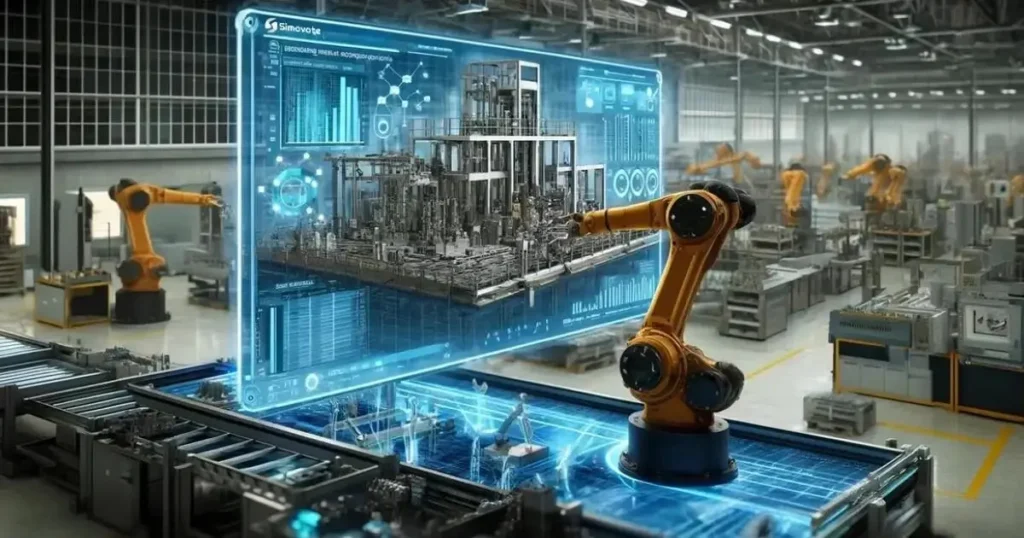
Digital Twin Technology creates virtual replicas of manufacturing equipment and production lines, allowing businesses to simulate operations before implementing changes. Manufacturers can test different production scenarios, identify bottlenecks, and optimize workflows without interrupting actual manufacturing processes.
Benefits include:
Digital twins provide manufacturers with valuable insights that support continuous improvement and operational excellence.
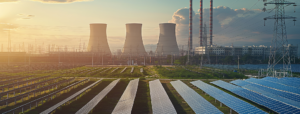
Sustainability has become a major focus for manufacturers in 2026. Companies are investing in energy-efficient equipment, renewable energy sources, and environmentally responsible production methods to reduce their carbon footprint while lowering operational costs.
Key sustainability initiatives include:
Sustainable manufacturing practices not only protect the environment but also improve long-term business performance.
Smart manufacturing trends in 2026 are reshaping industrial production through advanced technologies such as Artificial Intelligence, Industrial IoT, collaborative robots, digital twin technology, and sustainable manufacturing practices. These innovations enable manufacturers to improve productivity, reduce operational costs, enhance product quality, and respond more effectively to changing market demands.
Businesses that embrace these emerging technologies today will be better positioned to build resilient, efficient, and future-ready manufacturing operations while maintaining a strong competitive advantage in the global marketplace.
Innovation isn’t just about flashy new technology—it’s about solving real problems in smarter, faster ways....
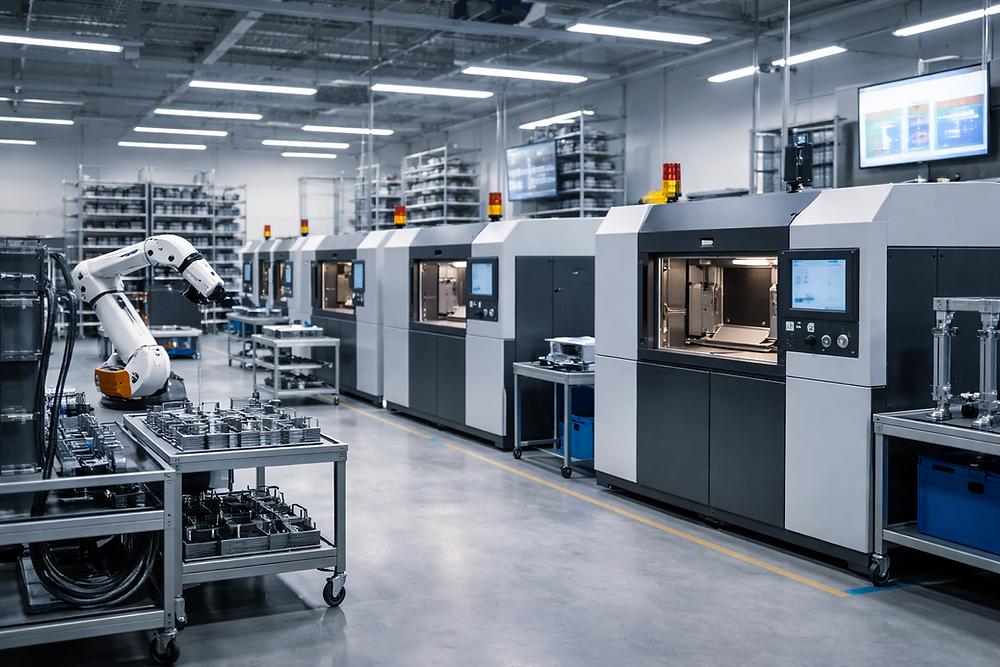
Additive Manufacturing, commonly known as 3D Printing, is transforming the way products are designed, developed,...
As manufacturing facilities become increasingly connected through the Industrial Internet of Things (IIoT), cloud computing,...
As industries face increasing pressure to reduce operating costs and meet environmental regulations, energy-efficient manufacturing...
Computer Numerical Control (CNC) machines have transformed the manufacturing industry by delivering exceptional precision, consistency,...
As global supply chains become more complex and customer expectations continue to rise, businesses are...