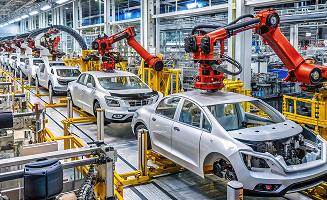
The manufacturing industry has embraced robotics as a key driver of productivity, precision, and efficiency. From assembling products to packaging finished goods, industrial robots are revolutionizing production lines by performing repetitive tasks with unmatched speed and accuracy.
Modern robotics goes beyond simple automation. Today’s intelligent robots work alongside human operators, communicate with connected systems, and adapt to changing production requirements. As manufacturers strive to meet growing customer demands and maintain high-quality standards, robotics has become an essential component of smart manufacturing.
Businesses investing in robotic automation are experiencing higher productivity, reduced operational costs, improved workplace safety, and greater manufacturing flexibility.
Increasing Production Efficiency
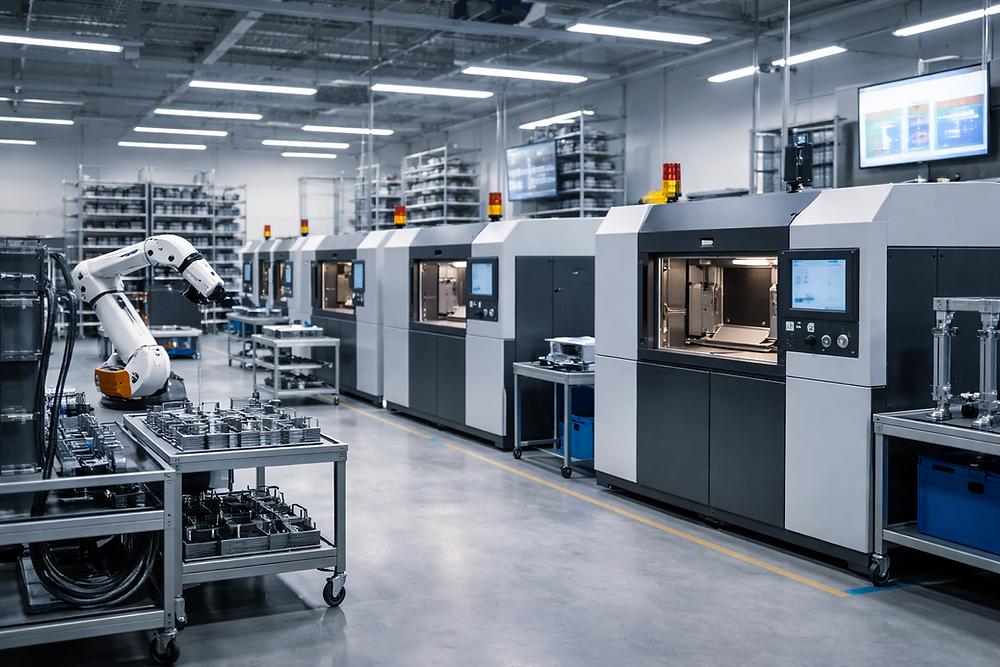
Industrial robots can perform repetitive manufacturing tasks continuously without fatigue, ensuring consistent productivity throughout the production cycle.
Common robotic applications include:
- Product assembly
- Material handling
- Welding
- Painting
- Packaging
- Palletizing
- Pick-and-place operations
By automating these tasks, manufacturers can increase production output while minimizing delays and human errors.
Improving Product Quality
Consistency is one of the greatest advantages of robotic automation. Robots perform programmed tasks with high precision, reducing variations that often occur during manual operations.
Quality improvements include:
- Accurate assembly
- Precise welding
- Uniform painting and coating
- Consistent packaging
- Reduced manufacturing defects
Higher quality products lead to improved customer satisfaction and fewer warranty claims.
Enhancing Workplace Safety
Many manufacturing processes involve hazardous environments where workers may be exposed to heat, chemicals, heavy machinery, or repetitive strain.
Robots improve workplace safety by handling dangerous tasks such as:
- Heavy lifting
- High-temperature welding
- Chemical spraying
- Hazardous material handling
- High-speed machining
This reduces workplace injuries while allowing employees to focus on supervision, maintenance, and quality control.
The Future of Industrial Robotics
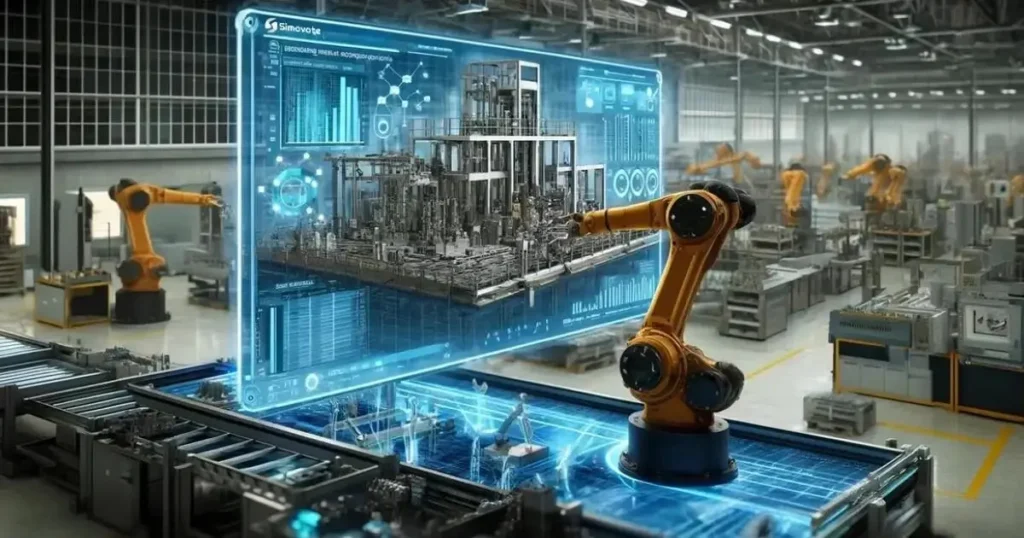
The next generation of manufacturing robots will combine Artificial Intelligence (AI), Machine Learning, Industrial IoT, and computer vision to make autonomous decisions and optimize production in real time.
Future robotic systems will be capable of:
- Self-learning production tasks
- Predictive maintenance
- Autonomous quality inspections
- Real-time production optimization
These innovations will enable factories to become smarter, more connected, and highly efficient.
Conclusion
Robotics is transforming production lines by improving speed, precision, safety, and operational efficiency. Modern industrial robots enable manufacturers to automate repetitive tasks, reduce production costs, improve product quality, and create safer working environments.
As Industry 4.0 continues to evolve, robotics will remain a cornerstone of smart manufacturing, helping businesses stay competitive in an increasingly automated world.